Most homeowners don’t wake up one morning thinking, I need a water softener.
It usually starts smaller than that.
You notice your shower door never really looks clean, no matter how hard you scrub. Your towels feel stiff straight out of the dryer. The dishwasher leaves cloudy spots on glasses that should be sparkling. And maybe, just maybe, your skin feels a little tighter after every shower.
Hard water has a way of sneaking into daily life. It doesn’t cause chaos. It just creates friction. Over time, that friction adds up — in maintenance, in cleaning, in appliance wear.
That’s where the conversation about softening begins.
What Hard Water Is Really Doing Behind the Scenes
Hard water contains dissolved minerals, primarily calcium and magnesium. They’re naturally occurring and not harmful to drink. But once they pass through plumbing systems, heat elements, and fixtures, they begin to leave behind scale.
Scale is stubborn. It clings to pipes, coats heating elements, and builds up inside appliances.
At first, it’s barely noticeable. A little white ring around the faucet. A faint chalky film in the kettle. But given enough time, it can narrow pipes, reduce water pressure, and make appliances work harder than they should.
The frustrating part? You adapt. You wipe, scrub, descale, repeat.
Until you realize there might be a simpler fix.
The Real-Life Comfort Changes
When people talk about water softener benefits, they often focus on how water feels.
And yes, that part matters.
Soap lathers more easily. Shampoo rinses out faster. Skin doesn’t feel as dry or tight. Clothes come out of the wash softer, without that slightly rough texture hard water can cause.
It’s not dramatic. It’s more like the difference between walking on gravel and walking on smooth pavement. Same path — less resistance.
And once you get used to that smoother experience, it becomes your new normal.
The Plumbing You Can’t See
There’s also the less glamorous but arguably more important side: plumbing protection.
Mineral buildup inside pipes and water heaters isn’t visible from your bathroom mirror. It’s happening quietly inside walls and utility rooms.
As scale accumulates, it reduces internal pipe diameter and coats heating elements. That buildup forces systems to work harder to move and heat water.
Over time, this can contribute to premature wear. Repair calls. Replacements you didn’t budget for.
A water softener doesn’t eliminate every plumbing issue, but by reducing mineral accumulation, it lowers one of the common stressors inside your home’s water system.
Sometimes protection isn’t flashy. It’s preventative.
The Energy Angle Most People Miss
Hard water doesn’t just leave deposits — it affects performance.
When scale coats the heating element inside a water heater, it acts as insulation. That means more energy is required to achieve the same temperature.
It’s subtle at first. A few extra minutes to heat. Slightly higher utility bills.
But over time, the link between softened water and energy efficiency becomes clearer. Clean heating elements transfer heat more effectively. Appliances run with less strain. Systems operate closer to their intended design.
You might not see a dramatic drop in your energy bill overnight. But incremental improvements compound.
Efficiency isn’t about one giant leap. It’s about consistent reduction of waste.
Everyday Cleaning Gets Easier
Hard water makes cleaning feel like a never-ending chore.
Soap scum clings to tiles. White scale marks appear on faucets. Glassware needs extra polishing.
Softened water reduces that stubborn residue because soap can dissolve properly without reacting to mineral content.
The difference shows up in small moments — less scrubbing, fewer specialty cleaning products, fewer repeat efforts.
It doesn’t eliminate housework. But it reduces the grind.
And sometimes, that’s enough.
Is It Worth It?
That depends on your water.
Testing hardness levels is the first step. Many regions experience moderate to severe hardness, often above 7 grains per gallon.
If levels are low, the impact may be minimal. If they’re high, the long-term implications are more significant.
A softener isn’t about overengineering your home. It’s about matching the solution to the problem.
Data makes that decision easier.
Maintenance Is Manageable
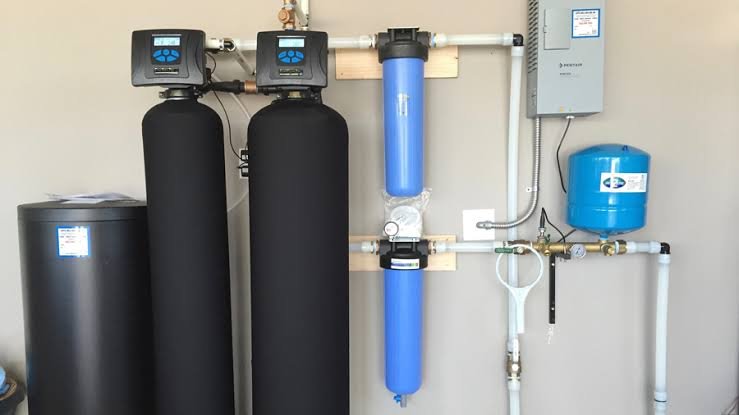
Softening systems require salt replenishment and occasional servicing. Most modern units regenerate automatically, flushing captured minerals and resetting the system.
Maintenance isn’t complicated. It’s predictable.
Like any home system, it works best when you pay attention to it.
And compared to replacing appliances early or repeatedly scrubbing scale, the trade-off often feels reasonable.
The Quiet Upgrade
Here’s the thing about a water softener: no one walks into your home and compliments it.
It’s not a kitchen remodel. It’s not new flooring.
But you feel it.
You feel it in the shower. You see it in clearer glassware. You notice it in how your washing machine performs.
Over time, you realize you’re dealing with fewer mineral stains and less buildup. You’re not thinking about hard water anymore — because it’s no longer a daily annoyance.
And that absence of friction? That’s valuable.
Final Thoughts
Hard water doesn’t create emergencies. It creates inconvenience.
A water softener doesn’t transform your life. It refines it.
Through improved comfort, protection of hidden systems, and subtle efficiency gains, it quietly improves how your home functions.