Water is one of those things we rarely think about when everything is working normally. You turn on the kitchen faucet, fill a glass, start the washing machine, or step into the shower. It all feels routine.
Then the white spots appear.
Maybe your shower door needs constant scrubbing. Perhaps your dishes come out of the dishwasher looking cloudy. Your water may have an unusual taste, or your appliances seem to collect mineral deposits faster than they used to.
These aren’t always signs of a serious problem, but they can be clues that your household water deserves a closer look. The good news is that modern home water solutions can address many common water-quality concerns when they’re selected according to the actual needs of the property.
Start by Understanding Your Water
Before choosing equipment, it’s worth finding out what you’re dealing with.
Water can contain dissolved minerals, sediment, chlorine, iron, and other substances depending on its source. Municipal water and private well water can have very different characteristics, and even neighboring properties aren’t guaranteed to have identical conditions.
A basic water test can provide useful information about hardness, pH, chlorine, iron, and other factors. If you have a private well, additional testing may be appropriate depending on local conditions.
Testing may sound like an unnecessary extra step when you’re eager to fix a problem. But it can prevent an even bigger mistake: buying a system that doesn’t address the issue.
Hard Water Is a Common Household Frustration
Hard water is primarily associated with calcium and magnesium dissolved in the water. These minerals aren’t necessarily a cause for alarm, but they can create plenty of everyday hassles.
You’ll often see the evidence around faucets, showerheads, sinks, and glassware. White or chalky deposits may form, soap can become harder to rinse away, and water-using appliances may accumulate scale.
This is one reason water softeners remain popular in homes with significant hardness.
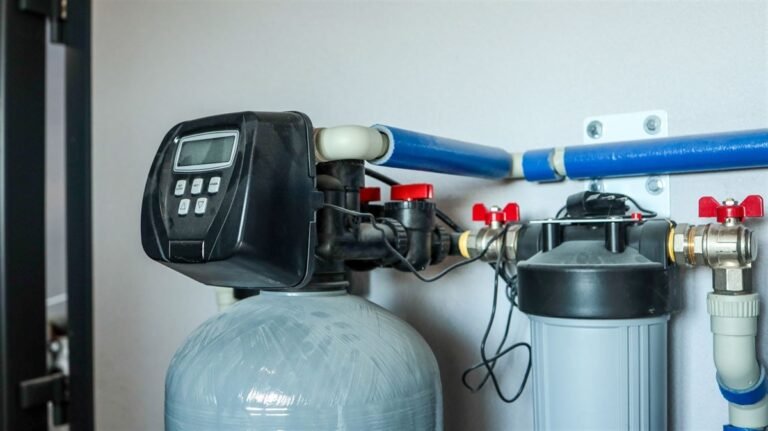
Traditional softeners use ion exchange to reduce calcium and magnesium in treated water. When properly selected and maintained, they can help reduce mineral scale and make some cleaning tasks easier.
But not every home needs one. Testing first is still the sensible approach.
What Whole-Home Filtration Can Do
When a water-quality concern affects more than just drinking water, whole-home filtration may be worth considering.
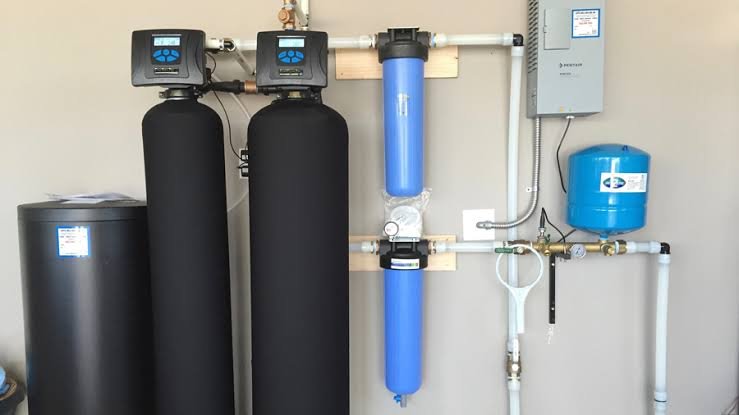
Unlike a filter installed beneath a kitchen sink, a whole-home system treats water as it enters the property. That means treated water can be delivered throughout the house, including bathrooms, laundry areas, and other fixtures.
This approach can be useful when sediment, certain odors, chlorine taste, or other treatable characteristics affect multiple parts of the home.
However, whole-home filtration isn’t automatically better simply because it treats more water. If your only concern is the taste of drinking water, a point-of-use filter may be more practical and less expensive.
Again, the right answer depends on the problem.
Don’t Confuse Filtration With Softening
The terms “filter” and “softener” are sometimes used as though they mean the same thing. They don’t.
A water softener is primarily designed to address hardness minerals such as calcium and magnesium. Filtration systems can target different substances depending on their media and design.
For example, activated carbon filtration is commonly used to reduce chlorine taste and odor. Sediment filters can capture particles. Other technologies are designed for specific contaminants.
Knowing this distinction can save homeowners from expecting one piece of equipment to solve every water-quality issue.
Think About Your Household’s Daily Routine
Water use isn’t the same in every home.
A family with several children may use considerably more water than a couple who travel frequently. Long showers, frequent laundry, multiple bathrooms, and water-heavy appliances all influence demand.
When selecting treatment equipment, consider peak usage as well as average usage. A system that works comfortably for normal household demand may struggle if several fixtures operate simultaneously.
Proper sizing matters more than many homeowners realize.
A professional can help evaluate flow rate, water conditions, available installation space, and expected demand before recommending equipment.
Drinking Water Deserves Special Attention
Even if the water throughout your home seems fine, you may still want additional treatment for drinking and cooking.
Taste and odor can be influenced by chlorine, minerals, plumbing, and other factors. Point-of-use filtration or reverse osmosis may be appropriate for certain concerns.
But don’t choose a system simply because it promises to remove “everything.” Different technologies are designed to reduce different substances.
If you’re worried about a specific contaminant, test for it and look for treatment equipment that is specifically designed and appropriately certified for that purpose.
Installation Is Only the Beginning
Buying a water treatment system isn’t the end of the story.
Filters need replacing. Softener systems require attention. Some equipment needs periodic cleaning or media replacement. Even the best system can lose effectiveness when maintenance is ignored.
Before purchasing, ask what ongoing care will be required. Find out how often filters should be changed, what replacement components cost, and whether professional servicing is recommended.
These expenses should be part of your decision from the beginning.
Keep an Eye on Your Appliances
Water quality can have a surprisingly close relationship with appliance maintenance.
Hard-water scale can collect inside water heaters, dishwashers, washing machines, coffee makers, and other water-using equipment. Sediment can also cause problems in certain situations.
Treating the water appropriately may help reduce some of these issues, but it isn’t a substitute for regular appliance maintenance.
Cleaning, descaling when appropriate, and following manufacturer instructions still matter.
Think of water treatment as an extra layer of protection rather than a magic shield.
Look at Long-Term Value
It can be tempting to choose the cheapest system available. After all, nobody wants to spend more money than necessary.
But initial price is only one part of the equation.
Consider installation, filter replacements, maintenance, operating costs, warranty coverage, and expected lifespan. A slightly more expensive system may provide better value if it is properly designed for your water and doesn’t require constant attention.
On the other hand, expensive doesn’t automatically mean better. The goal is to find the right balance.
Better Water Starts With the Right Information
Improving household water quality doesn’t require turning your home into a laboratory.
Start by identifying the concern. Test the water when appropriate. Understand what the results mean, and then choose treatment based on the specific issue.
Maybe you need a softener for significant hardness. Perhaps filtration is enough for taste and odor. In another home, a drinking-water system may make more sense than treating every faucet.
There isn’t one perfect answer for everyone.
The best solution is the one that fits your water, your home, your budget, and your everyday routine. Once you approach water treatment that way, the process becomes much less confusing.
And when the right system is quietly doing its job in the background, you get to enjoy the little things: cleaner-looking fixtures, easier maintenance, better-tasting water, and fewer “why is that buildup back again?” moments.
Sometimes that’s all a good home improvement really needs to accomplish.